Peek-a-boo!
Oh, hey there! Another day, another blog about my movie opener. Get your popcorn and drinks ready, as today I will be discussing the different varieties and types of camera shots and angles in the movie opener.
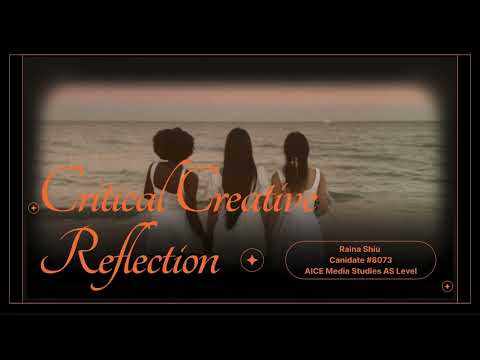
One of the main camera shots that we used is a wide shot. We mainly used wide shots when transitioning from one scene to another. For example, we first started off our movie opener with an establishing shot, which was also a wide shot. We chose to do a wide shot because it allows the audience to take in the scene and absorb all the relevant information in it at once. The audience can get a general view and feel of the mood and setting of the first scene. Then, we used a wide shot on the scene where the 3 girls have their backs against the camera and are walking away from the ocean (this shot is a transition from Emijola scattering ashes into the ocean). We chose to use a wide shot for this shot of the scene because we wanted the shot to be wide enough so that the audience can visually see the different directions that the three girls are walking away to. The whole point of this scene was to show that each girl is going to follow their own path when it comes to grieving. Thus, by using a wide shot, it seems as if the audience can almost feel for themselves the physical distance that is growing between the girls and what is left of their friendship. The next wide shot that was used is a transition from this shot to scene 4, which is the staircase establishing shot that establishes the overall setting of the school scene. It shows students walking up the stairs and heading to their classes. We used a wide shot for this scene so that the audience fully understands it's a transition to another setting and part of the film. This allows the audience to have context for what is about to happen. The wide shot shows where the characters are now (school) and who surrounds them (teacher, friends, classmates).


Another common shot size we used was medium full shot and medium shot. We mainly used these two shots because this shot shows the characters' torso and head (from waist to head). As a result, this allows the audience to pick up on our character's movements and gestures, which helps them understand the mood of our movie opener. In other words, by using medium and medium full shots, this allows the audience to see each character's facial expressions in context with their body language. For example, in the flashback scene, it is a medium shot. This medium shot helps those watching to see the body language of Emijola along with her facial expressions. Her facial expressions are clearly concerned, and her body language is shaking and trembling. As a result, the audience can understand that the scene is serious and that something concerning (Jahzara's death) is happening. Overall, throughout the whole flashback scene, it is a medium shot. We intentionally did this because we wanted to make sure that the viewers could fully understand the different emotions of the three girls who surround the room. Raina is awkward and surprised, Emijola is scared and filled with emotions, and Ngoc is shocked and frozen.


The last type of shot that we used, which is different from the others, is a point-of-view shot. We intentionally used a point-of-view shot in the last scene, the classroom scene, so that we could show and provide the audience with a sense of the numbness that Ngoc is feeling after Jahzara's death. A POV shot is a shot that shows a view from the subject's perspective/what they are looking at. As a result, by having this scene be portrayed in the eyes of Ngoc, the audience can feel the tension between the two other friends, Raina and Emijola, after Jahzara's death.




No comments:
Post a Comment